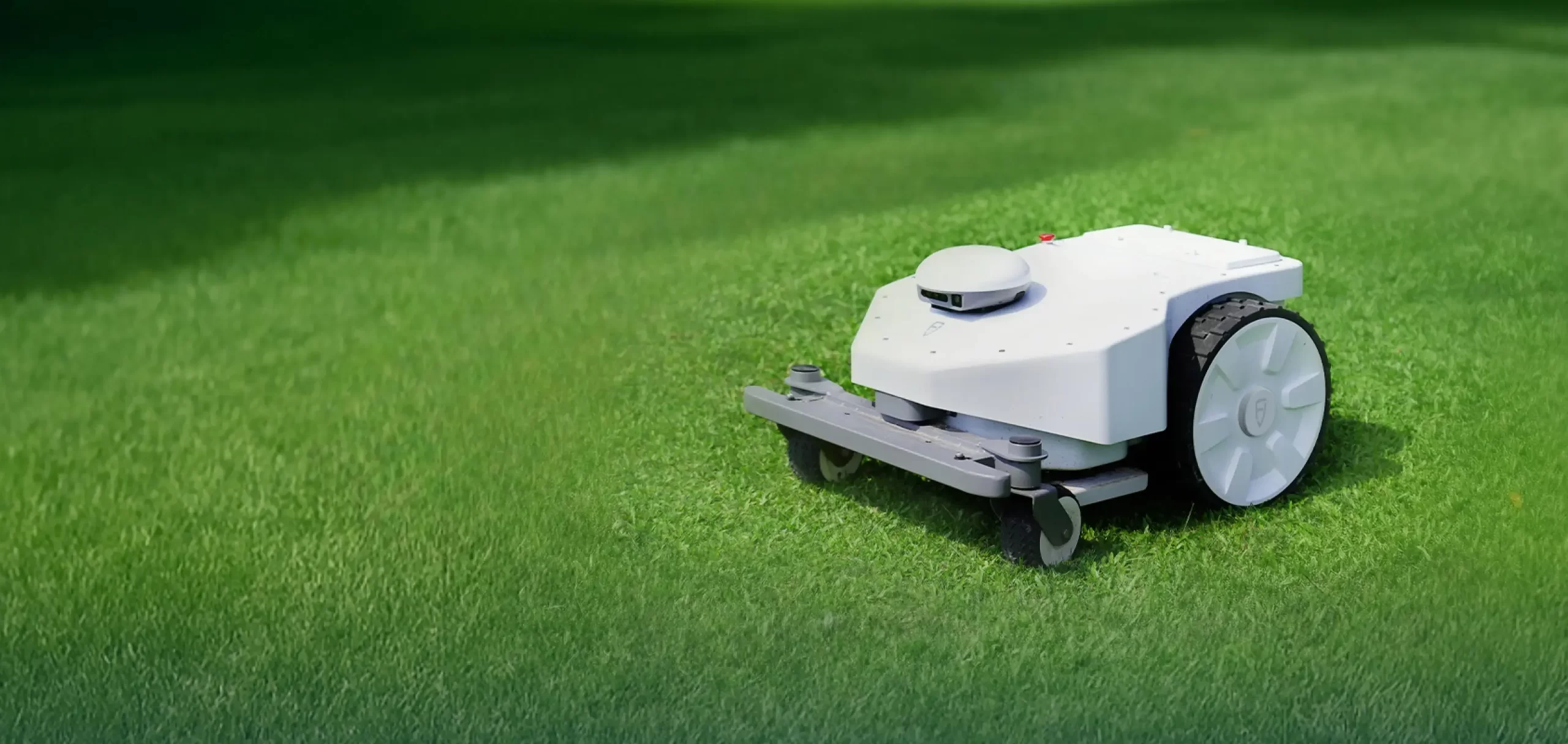
The maintenance of high-performance sports turf represents one of the most demanding disciplines within facilities management. Whether managing a premier division football stadium, a multi-pitch community sports hub, or an expansive golf facility, groundskeeping teams face unrelenting pressure to deliver surfaces that are visually immaculate, structurally resilient, and perfectly consistent for play. For decades, achieving this level of presentation depended almost entirely on heavy machinery and skilled manual labour. Greenkeepers and grounds staff operated diesel-powered ride-on mowers, tractor-mounted gang units, and walk-behind cylinder machines to sculpt fairways and pitches. However, the rapidly accelerating adoption of robotic lawn mowers is reshaping the traditional paradigms of sports turf maintenance. Grounds teams increasingly find themselves evaluating whether automated systems can meet or exceed the rigorous standards historically achieved through manual operation.
At the heart of the comparison between manual methods and robotic lawn mowers lies a fundamental difference in agronomic philosophy. Traditional mowing regimes typically rely on periodic, scheduled cuts. A standard football pitch or golf course fairway might be mown two or three times a week using heavy rotary or cylinder machines, depending on growth rates, weather conditions, and staffing availability. This approach removes a significant portion of the leaf blade in a single pass, often adhering to the classic rule of cutting off no more than one-third of the grass tissue at any one time. While effective, this process exposes the turf grass to cyclic physiological stress. The sudden reduction in leaf area temporarily halts root development while the plant redirects energy reserves toward recovering its canopy. Furthermore, manual mowing yields substantial volumes of clippings that must either be collected and transported offsite, creating logistical waste challenges, or left as heavy windrows that risk smothering the turf underneath if not properly dispersed.
In sharp contrast, robotic lawn mowers operate on a continuous, micro-clipping philosophy known as mulching. Operating daily or multiple times per day across pre-programmed zones, these autonomous units slice away mere millimetres of the leaf blade during each pass. Because the clippings are extraordinarily small, they do not collect on top of the turf surface or stick to players’ boots and golf balls. Instead, the microscopic cuttings drop directly into the canopy, breaking down rapidly to return vital nitrogen, potassium, and organic matter back into the soil matrix. This continuous, low-impact cutting action eliminates the physiological shock associated with infrequent manual mowing. Research demonstrates that the constant grooming provided by robotic lawn mowers encourages lateral tillering, which dramatically increases sward density, enhances leaf fineness, and creates a tight, carpet-like playing carpet that naturally outcompetes weeds and undesirable coarse grasses.
Beyond the biological responses of the grass plant itself, physical soil structure plays a critical role in the debate between automated and manual turf care. Traditional manual mowers, particularly large ride-on cylinder units and fairway tractors, are heavy pieces of machinery. Repeatedly driving heavy equipment across wet or sensitive soil structures creates severe sub-surface compaction. Over time, compaction restricts pore space within the soil, severely limiting oxygen diffusion to the root zone and hindering water infiltration. Groundskeepers maintaining pitches manually must invest significant time and financial resources into remedial aerifying processes, such as deep-tine verti-draining, decompaction spiking, and intensive top-dressing, simply to reverse the physical damage caused by their own cutting equipment.
Here, robotic lawn mowers provide a distinct physical advantage due to their lightweight design. Weighing a fraction of a traditional commercial mower, robotic lawn mowers exert minimal ground pressure. They can travel over saturated pitches without creating deep ruts or compressing the root zone, preserving natural soil porosity and drainage capacity. This marked reduction in ground compaction translates into healthier, deeper root architecture, allowing sports turf to survive extreme drought conditions and heavy surface traffic far more effectively. Furthermore, because robotic lawn mowers can operate safely in wet conditions without causing structural damage to the surface, grounds managers are no longer forced to delay crucial mowing schedules due to unexpected rainfall, preventing the turf from growing out of control during wet spells.
Operational efficiency and labour allocation represent another significant battleground in modern grounds management. Sports facility managers face mounting challenges, including shrinking operational budgets, rising fuel costs, and acute shortages of qualified grounds staff. Operating traditional manual mowers is an inherently labour-intensive enterprise. On a typical eighteen-hole golf course, fairway mowing can consume dozens of staff hours each week, keeping qualified technicians locked into tractor seats for entire shifts when they could be performing high-value agronomic tasks. By shifting routine mowing duties to robotic lawn mowers, facilities can fundamentally realign their operational workflow.
Automating the basic cutting process allows skilled greenkeepers and grounds staff to redirect their time toward intricate tasks that directly elevate the venue’s playing conditions. Personnel can focus on detailed bunker maintenance, precision irrigation management, targeted disease treatment, divot repair, and fine-tuning greens presentation. Rather than replacing human expertise, robotic lawn mowers act as a force multiplier for grounds teams, allowing limited labour resource to be deployed where human skill, visual judgement, and artistic detail are indispensable.
Environmental considerations and operational noise also weigh heavily in favour of automated technology. Conventional sports turf machinery relies predominantly on internal combustion engines powered by diesel or petrol. These machines generate substantial carbon emissions, localised exhaust fumes, and significant noise pollution. For sports grounds situated near residential areas, school campuses, or urban developments, manual mowing schedules are strictly constrained by noise curfews, restricting early morning or late-night maintenance windows. Modern robotic lawn mowers, powered by rechargeable lithium-ion battery systems, operate with zero direct tailpipe emissions and at remarkably low decibel levels. A fleet of robotic lawn mowers can work silently throughout the night or during active training sessions without disrupting nearby residents or distracting athletes, maximising the operational window available for turf maintenance.
However, transitioning completely from manual mowing regimes to robotic lawn mowers is not without its operational challenges and financial trade-offs. The capital expenditure required to deploy automated systems across large multi-pitch sites or golf courses can be substantial. In addition to purchasing the physical fleet, facilities must invest in robust infrastructure, including perimeter boundary wiring or advanced satellite navigation reference stations, dedicated electrical charging infrastructure, and secure storage facilities. While the long-term operational savings in fuel, labour, and machinery depreciation often justify the investment over a multi-year horizon, the initial capital hurdle remains a primary barrier for smaller amateur clubs and municipally funded grounds.
Furthermore, technical limitations mean that manual mowing cannot be entirely eliminated from high-level sports facilities. Complex boundary edges, steep embankments, narrow pathways, and tight runoff areas around stadium structures often exceed the current operational limits of fully autonomous units. Similarly, preparing specialised presentation patterns, such as the classic crisp stripes or checkerboard designs required for televised stadium fixtures, remains an area where heavy, operator-driven cylinder mowers equipped with rear rollers maintain a distinct visual advantage. While some advanced robotic lawn mowers are now capable of executing precise stripe patterns using high-precision positioning technology, many commercial turf managers still prefer manual machines for match-day preparation to achieve that iconic, razor-sharp cosmetic finish.
Maintenance and fleet management paradigms also shift when moving away from manual equipment. Traditional machinery maintenance revolves around mechanical engines, hydraulic lines, and large cutting cylinders that require regular backlapping and grinding. Operating robotic lawn mowers requires grounds staff to adopt a different technical skill set focused on software updates, fleet management apps, boundary wire troubleshooting, and frequent replacement of small, razor-sharp cutting blades. Blade maintenance becomes a continuous routine, as the small blades on robotic lawn mowers must remain impeccably sharp to ensure a clean, precise cut rather than tearing the grass tips, which could otherwise expose the plant to fungal pathogens.
Ultimately, the choice between traditional manual mowing and autonomous systems is rarely an all-or-nothing proposition. The most progressive sports facilities are adopting a hybrid strategy that leverages the strengths of both approaches. In these hybrid management frameworks, robotic lawn mowers handle the relentless, baseline work of maintaining fairways, practice fields, and expansive outfields on a daily basis, ensuring optimal sward density, superior health, and zero compaction. Meanwhile, skilled grounds staff utilise specialised manual mowers for precise greens maintenance, pitch marking, and match-day cosmetic prep. By combining the continuous efficiency of robotic lawn mowers with the strategic expertise of professional groundskeepers, sports venues can achieve a level of turf consistency, health, and operational resilience that was previously unattainable through manual labour alone.